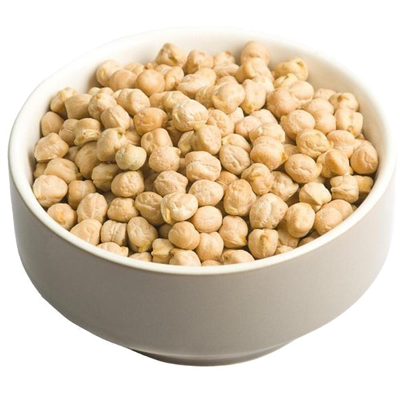
The name chickpea comes from the Latin word cicer, referring to the plant family of legumes, Fabaceae. It is also known by its popular Spanish-derived name, the garbanzo bean. Kidney beans, black beans, lima beans, and peanuts are other familiar foods found in this legume family. These plants produce edible seeds, called pulses, that have high nutritional value. Two main varieties of chickpeas are the larger round light-colored Kabuli-type, common in the United States, and the smaller dark irregularly shaped Desi-type often used in India and the Middle East.
Chickpeas contain a range of nutrients, including protein, which is necessary for bone, muscle, and skin health. For people who are cutting down on meat consumption, a dish of chickpeas and rice, for example, can contribute a significant amount of protein to the diet. A cup of chickpeas provides almost one-third of an adult’s daily protein needs. The nutrients in chickpeas may also help prevent a number of health conditions.