




Process of Himej or Terminalia Chebula Cultivation
Bringing Black Himej or Terminalia Chebula to the form in which it is used is tedious, and many things happen before it is sold. We at Juvenis Exim take care of bringing a quality product to our customers. This we do by having an integral partnership with farmers who are the cornerstone of the entire process. In this blog, we will discuss the value chain of Himej and what all things happen until we ship the product.
Black Himej or Bal Harad is a 1cm to 2cm black seed, an essential ingredient in many ayurvedic formulations such as Churun, Triphala, Chawanprash. Its health benefits range from treating constipation to curing cough and other common cold symptoms. This makes it the most widely used ayurvedic raw material. For more details on its uses, please read our blog Decoding Himej or Terminalia Chebula here. The growth season of this seed is March – April. The trees start taking fruit from early March and take around 1.5 to 2 months to grow to a sufficient size fruit.
Once the fruit grows sufficiently, they are plucked down in their green and soft form. The tree being long, which rises to the height of 10m to 15m, creates difficulty in plucking operations, and we at Juvenis Exim provide guidance and consultation to these farmers.
Once all the collection for the day is completed, people bring the seeds to their backyards, farms or open ground and spread them in sunlight to start the process of drying. This process may take days or even weeks and is a critical stage in the value chain that decides this product's colour and form. Uncertain rain or a moist environment can hamper the state of the product, and its exposure to water might leave white stains. We guide farmers regarding the value of 'Black' Himej and incentivize farmers to take quality precautions to bring the best product to us.
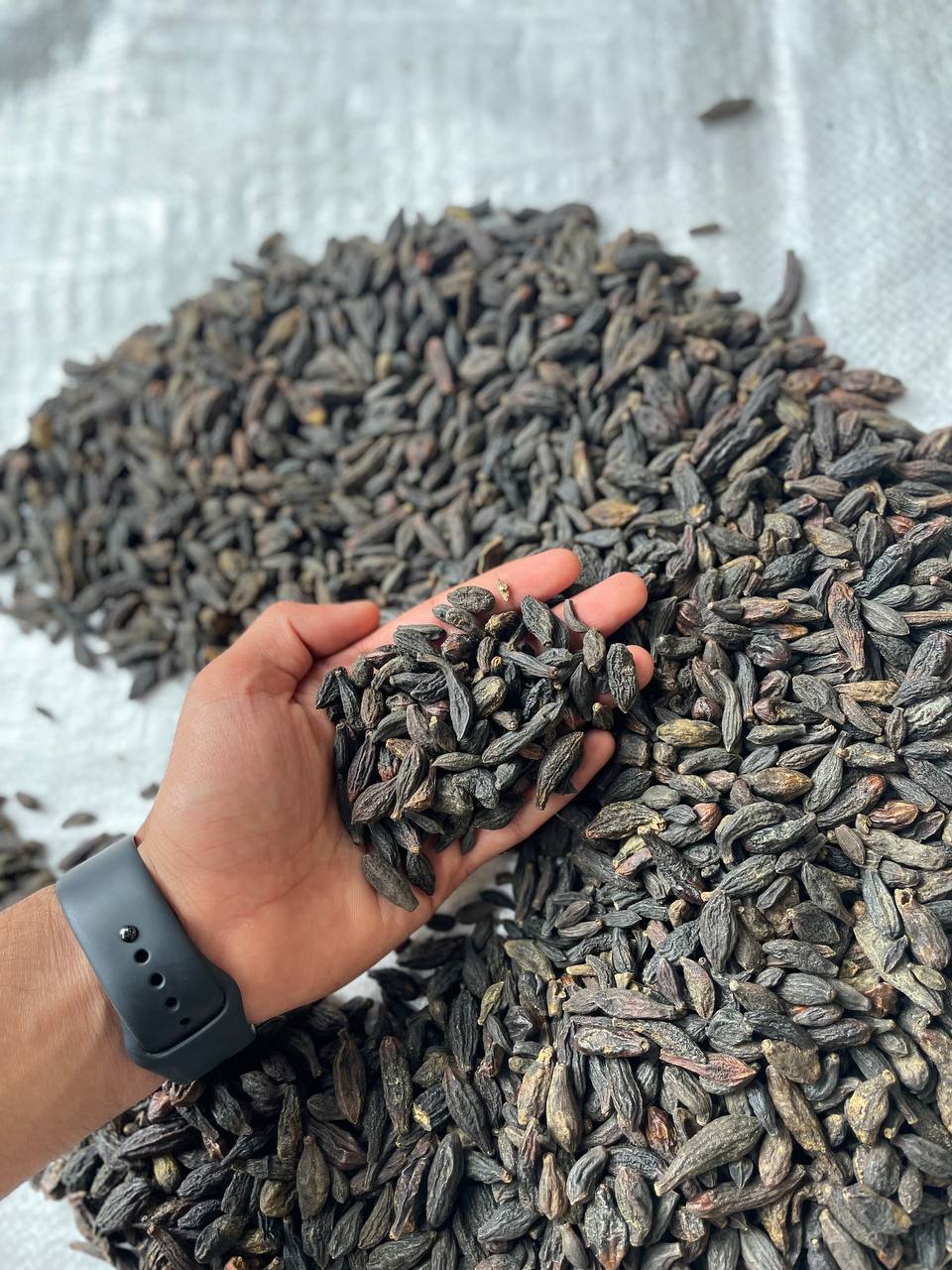
Once the product arrives at our warehouse, we ensure it gets cleaned to the highest quality. As farmers dry this product in their backyard or farm, it is bound to have small stones, dust, and other waste materials. So, we machine clean the product to remove these materials. After that, the product is graded to provide consistent quality to our customers as needed. This brings us to the final stage of weighing and packaging, where we are flexible to adapt to clients' requests and provide the products on time.